
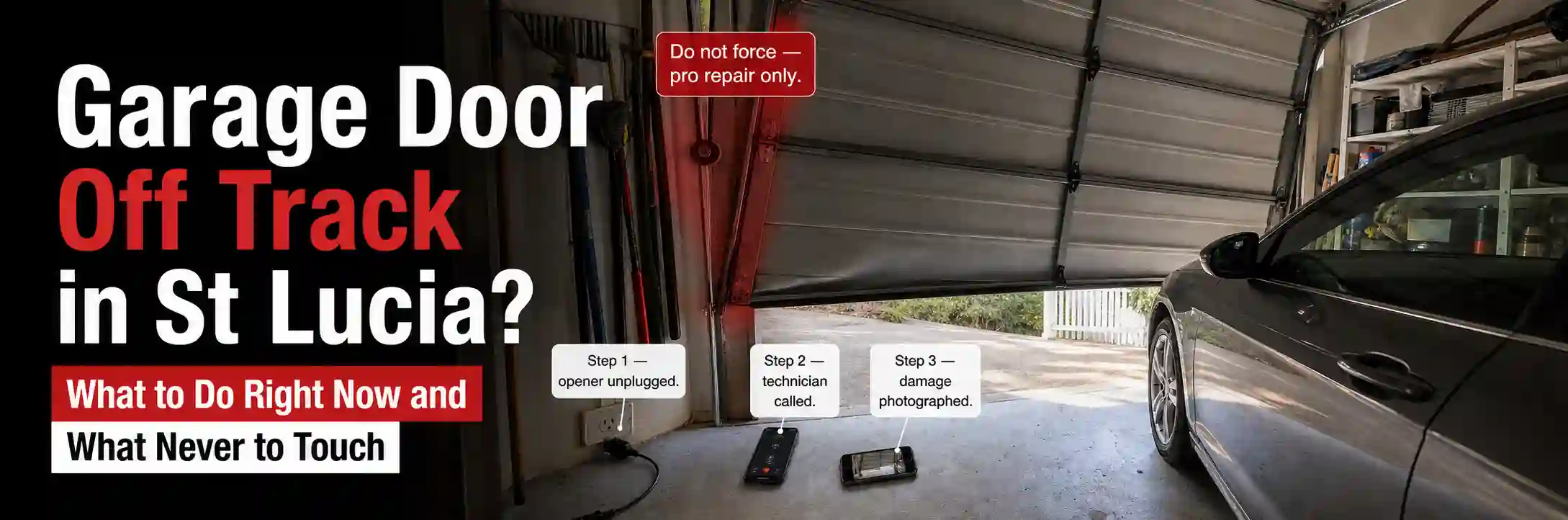
It usually happens in a second. A reversing car clips the bottom corner, or a worn roller finally gives way mid-lift, and suddenly one side of the door hangs lower than the other.
A garage door is off track when one or more rollers have slipped out of the metal tracks that guide it. The safest response is to stop using the door, keep the opener switched off, keep people clear, and call a licensed technician.
Here’s how to spot the problem, what causes it, and why forcing the door back into place is a bad idea.
How Can You Tell Your Garage Door Is Off Track?
An off track door is rarely subtle. Look for these signs:
- The door hangs crooked or sits lower on one side
- One or more rollers are visible outside the track
- The door jams partway and won’t move up or down
- You hear grinding, scraping or loud popping as it moves
- A gap appears at the side or bottom, even when the door is closed
- The opener strains, stops or reverses without a clear reason
Even one of these is enough to stop using the door. A door that’s slightly off track can slip further the next time it moves.
Off Track or Just Stiff? How to Tell
Not every sticky door has come off its track. This quick guide helps you tell the difference.
| What you see | Likely meaning | What to do |
| Rollers outside the track | Off track | Stop, call a technician |
| Door sticks but sits straight | Dirt, dry rollers or worn parts | Clean the tracks, book a service |
| Door crooked with a hanging cable | Broken cable | Stop, call a technician |
| Door stops with a small gap at the bottom | Obstruction or sensor | Clear the area, check sensors |
What to Do Straight Away
The first few minutes matter. These steps keep people safe and stop the damage from growing:
- Stop using the door. Don’t press the remote or wall button, because a jammed opener can burn out its motor.
- Keep people and pets clear. A door off track can shift or fall without warning.
- Switch the opener off at the power point if you can reach it safely.
- Photograph the damage before anything is moved. Photos help with insurance claims or a rental report.
- Call a licensed technician and describe what you can see.
If you’re renting in St Lucia, let your property manager know as soon as possible. They’ll often need to arrange or approve the repair.
Expert tip: Only pull the red release cord if the door is fully closed or firmly supported. If it’s hanging at an angle, leave it alone, because pulling the cord can let the door drop.
Is It Dangerous to Keep Using a Garage Door That’s Off Track?
Yes. A door that’s off track can fall, twist or jam without warning, and every extra cycle puts more strain on the parts that are still holding it up.
The opener can also burn out trying to move a door that’s stuck, and cables can snap under an uneven load. A small fix quickly becomes a bigger one.
There’s a security angle too. A door that won’t close fully leaves your garage, and often your car and tools, open to opportunists.
What Causes a Garage Door to Come Off Track?
An off track door is a symptom, not the root problem. Finding the cause matters, otherwise it will happen again.
Vehicle Impact
This is the most common cause. A car doesn’t need to be moving fast, because even a low-speed bump to the bottom panel can knock rollers out of the track. Reversing out of a tight St Lucia driveway is a classic way it happens.
Worn or Broken Rollers
Rollers wear out over time. A roller that wobbles, cracks or seizes can pop out of the track, and the rest of the door soon follows.
A Broken Cable or Spring
Cables and springs balance the weight of the door. If one fails, one side can drop while the other stays up, and the uneven load pushes rollers out of line. A broken cable is one of the most common triggers.
Loose Brackets and Bent Tracks
Daily vibration slowly loosens the brackets that hold the tracks to the wall. Once a track shifts or bends, the rollers no longer sit where they should.
Obstructions in the Track
A stray bolt, a build-up of grit or a small object caught in the track can jam a roller and force it out.
Which Doors Are Most at Risk of Coming Off Track?
Some doors are more likely to derail than others. The usual suspects are:
- Doors that haven’t been serviced in years
- Doors in busy households or share houses with several drivers
- Doors that have already been bumped or dented
- Doors with noisy, wobbly or visibly worn rollers
- Doors with sagging or frayed cables
If your door ticks several of those boxes, a service now is a smart move.
Roller Doors and Sectional Doors Come Off Track Differently
The door type changes what you’ll see on the day.
- Roller doors: the door edges slip out of the side guides, so the curtain bulges, tilts or jams as it rolls.
- Sectional doors: individual rollers pop out of the vertical or horizontal tracks, leaving the panels twisted or hanging from the cables.
Either way, the fix starts with finding why it happened, not just guiding the door back in.
Can You Fix a Garage Door Off Track Yourself?
In most cases, no. A door that has come off its track is heavy, unstable and often under spring tension. Forcing rollers back in can bend the track, snap a cable or send the door crashing down.
What You Can Safely Do
Stick to the basics. Keep the area clear, take photos, switch off the opener and look from a safe distance for obvious causes like a hanging cable or a bent track.
What to Leave to a Technician
Don’t reseat rollers, bend tracks back, or touch cables, springs or drums. A job that looks like a quick tap with a mallet can turn into a serious injury.
Expert tip: Never keep operating a door that’s partly off track to see if it ‘sorts itself out’. Every cycle can bend the track further and strain the cables, springs and opener.
What If the Door Is Stuck Open or Closed?
If the door is stuck closed with your car inside, resist the urge to force it. Lifting a crooked door by hand can twist the panels or drop the door on your hands.
If it’s stuck open, treat it as urgent. Move valuables out of sight, lock the internal door to the house, and arrange a same-day callout so the garage isn’t left open overnight.
How Does a Technician Repair an Off Track Garage Door?
- A proper repair looks at the whole system, not just the roller that jumped.
- Make the door safe and secure it so it can’t move.
- Inspect the tracks, rollers, hinges, cables and springs for damage.
- Straighten or replace bent tracks and worn or broken rollers.
- Refit the rollers and realign the tracks so the door sits square.
- Test the door through several full cycles, including the opener’s safety reverse.
A straightforward realignment can take an hour or two. If panels, cables or tracks are damaged, it can take longer. A local St Lucia technician usually carries common rollers and parts, which helps keep a repair to a single visit.
If a panel is badly dented or cracked, the door may need a section replaced rather than just a realignment.
How to Stop Your Door Coming Off Track Again
Most off track doors have warning signs beforehand. A few habits make a real difference.
- Wait for the door to open fully before you drive out or reverse
- Look over the tracks, brackets and rollers every few months for loose bolts or wear
- Keep the tracks clear of dirt, leaves and debris
- Replace noisy or wobbly rollers before they fail
- Book a professional service once a year
Expert tip: After a storm or a minor bump, stand inside and run your eye along both tracks. Gaps, rubbing marks or a roller sitting slightly proud of the track mean it’s time for an inspection.
Conclusion
A garage door off track looks dramatic, but the response is simple. Stop using it, keep everyone clear, switch the opener off and get a professional to look at it.
The real danger comes from trying to force it. Springs, cables and a heavy door don’t forgive mistakes, and a quick DIY attempt can turn a one-hour repair into a much bigger job.
Understanding the causes, from vehicle bumps to worn rollers and loose brackets, also helps you catch problems earlier. A door that’s checked and maintained is far less likely to come off its track in the first place.
For St Lucia households, that means a little attention to the tracks, rollers and brackets, and a careful eye on the door after any knock. Small habits protect the door, the opener and your safety.